Tuesday, 29 July 2025

NISAR Satellite Mission: Dual-Frequency Radar & Tracking Quiz

The NISAR Mission: Watching Earth to Help People

Introduction

The NASA-ISRO Synthetic Aperture Radar (NISAR) mission is a historic joint project between the United States (NASA) and India (ISRO). This advanced radar imaging satellite is specifically engineered to capture high-resolution, dual-frequency data of Earth's crust and dynamic ecosystems. Launched from the Satish Dhawan Space Centre in Sriharikota, NISAR acts as a premier space observatory to track natural disasters, study climate change, and support precision agriculture.


๐Ÿ‘‰ Natively Engineered Core: Vikram 32: India’s First Homegrown Microchip Technology

What is NISAR and How Does It Work?

NISAR is an Earth-observing satellite that utilizes state-of-the-art radar tracking systems to map the globe every 12 days. Unlike optical cameras, its instruments can easily pierce through dense cloud covers, storms, and operate seamlessly during day or night. It is the world's first satellite mission to deploy dual-frequency radar subsystems:

  • L-Band SAR (NASA): Operating at a 24 cm wavelength, this low-frequency band can penetrate thick forest canopies and dry soil layers to map deep structural shifts.
  • S-Band SAR (ISRO): Operating at a 12 cm wavelength, this band is optimized for scanning ice dynamics, crop surfaces, and coastal lines with exceptional resolution.

Key Objectives: Protecting Earth from Space

By flying in a specialized Sun-synchronous orbit at an altitude of approximately 743 kilometers, NISAR tracks planetary variations down to fractions of an inch across a massive 242-kilometer swath width. Its primary mission targets include:

  • Disaster Mitigation: Real-time mapping of ground displacement during earthquakes, active volcanic shifts, and coastal landslides to provide instant data to emergency rescue operations.
  • Climate and Cryosphere Monitoring: Scanning ice sheet acceleration parameters in Antarctica and Greenland, mapping forest biomass volume, and assessing global carbon storage matrices.
  • Agricultural Strategy: Providing farmers and ecological networks with critical information on regional soil moisture density and crop health variations to optimize crop yields.


๐Ÿ‘‰ Space History: Sputnik 1: The Dawn of the Space Age

Why is NISAR a Global Asset?

Budgeted at approximately $1.5 billion, NISAR stands out not only for its unprecedented dual-frequency capabilities but also because NASA and ISRO have pledged to keep its compiled imaging datasets **completely free and accessible to the public**. Scientists, agronomists, and global environmentalists can utilize this vast information pool to combat ecosystem challenges across the globe.


๐Ÿš€ NISAR RADAR MISSION QUIZ ๐Ÿ›ฐ️

Scan your radar hardware and orbital knowledge below!

1. NISAR is a state-of-the-art joint space mission between which two prominent space agencies?
2. What does the acronym 'SAR' stand for in the context of the NISAR satellite layout?
3. Which specific radar band frequency subsystem was natively designed and built by ISRO?
4. How many days does the NISAR spacecraft take to complete a full orbital cycle to map the entire globe?
5. What is the approximate structural width of NISAR's sweeping ground swath track?

Explore Our Ultimate Space Science Archives:

Sunday, 6 July 2025

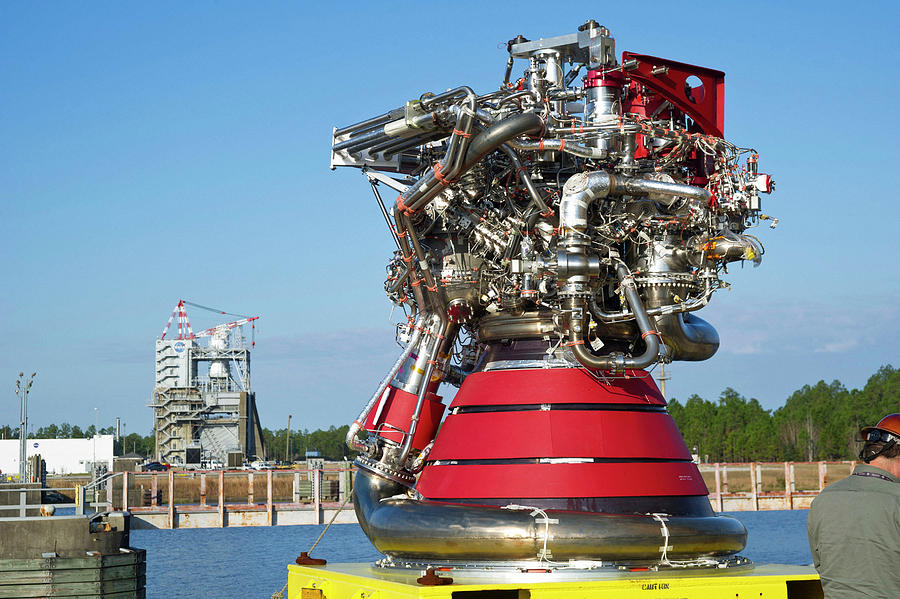
Rocket Engines Explained: Cryogenic vs Solid Propulsion & Quiz Hub

Rocket Engines and Their Fuel Types: Powering Space Exploration

Rocket engines space launch vehicles ke sabse mahatvapurna components hain jo spacecraft ko dharti ki gravity se baahar nikalne ke liye raw thrust generate karte hain. Ek rocket ki efficiency, uski payload capacity aur mission success is baat par depend karti hai ki usme kis tarah ka engine aur propellant combinations use kiya ja raha hai. Chaliye aaj in mukhya rocket engines aur unme use hone waale aerospace fuels ko bariki se samajhte hain.


๐Ÿ‘‰ Trending Orbital Update: China Launches First Satellites for World's First Space-Based Supercomputer Network

1. Solid Rocket Engines (Raw Initial Power)

Solid rocket engines mein fuel aur oxidiser ka ek pre-packed solid mixture hota hai jo casing ke andar pehle se bhara hota hai. Isme chemical mix ke roop mein ammonium perchlorate (oxidiser), aluminium powder (fuel), aur HTPB binder use kiya jata hai.

  • Characteristics: Simple design, koi moving parts nahi hote, jisse reliability bohot high ho jaati hai.
  • The Main Catch: Inki Specific Impulse (efficiency indicator) kafi kam hoti hai (200–300 seconds), aur inhein ek baar aag lagane ke baad **throttle ya switch off nahi kiya ja sakta**.
  • Applications: Heavy launch vehicles ke shuruati strap-on boosters mein (jaise ISRO ke PSLV ka S139 booster aur NASA ka SLS booster system).

2. Liquid Rocket Engines (The Precision Kings)

Liquid engines mein fuel aur oxidiser alag-alag tanks mein hote hain jinhe turbopumps ke jariye high pressure ke sath combustion chamber mein inject kiya jata hai. Inke teen mukhya types hote hain:

2a. Cryogenic Rocket Engines (-150°C se niche)
Yeh liquid hydrogen (LH2) ko fuel aur liquid oxygen (LOX) ko oxidiser ke roop mein use karte hain. Inki specific impulse sabse high (**up to 450 seconds**) hoti hai. Yeh bohot eco-friendly hote hain kyunki byproduct ke roop mein sirf paani ki bhaap (water vapour) nikalte hain. Inka upyog heavy vehicles ke upper stages mein hota hai jaise ISRO ka CE20 Cryogenic Engine jo LVM3 rocket mein use hota hai.

2b. Semi-Cryogenic Rocket Engines
Yeh system Liquid Oxygen (LOX) ke sath highly refined kerosene (**RP-1 fuel**) ka upyog karta hai. Denser fuel hone ki wajah se iske tanks chhote hote hain aur iska thrust-to-weight ratio kafi badiya hota hai. SpaceX ka Falcon 9 (Merlin Engines) isi par chalta hai. ISRO bhi filhal apna high-thrust **SE2000 Semi-Cryogenic engine** develop kar raha hai.

2c. Hypergolic Rocket Engines
Isme use hone waale chemicals (jaise Hydrazine derivatives aur Nitrogen Tetroxide) aapas mein touch hote hi bina kisi spark plugs ke **apne aap bhabhak uthte hain (spontaneous ignition)**. Inhe space mein baar-baar band aur restart kiya ja sakta hai, isiliye inka use satellite manoeuvring thrusters aur spacecraft attitude controls mein hota hai.

3. Hybrid Rocket Engines (The Safe Alternative)

Hybrid systems solid aur liquid dono ka combination hote hain—jaise solid wax ya HTPB block core fuel hoga aur liquid nitrous oxide ya LOX ko pump kiya jayega. Yeh solid engines se zyada controllable hote hain (throttle aur shut down ho sakte hain) aur pure liquid systems se kafi saaf aur safe hote hain. Virgin Galactic ka SpaceShipTwo suborbital vehicle isi par kam karta hai.


๐Ÿ‘‰ Cosmic Mystery: Black Holes: Decoding the Structure of Cosmic Enigmas

Global Engine Dominance Matrix

Cryogenic aur Semi-Cryogenic engine parameters ko banana behad mushkil aerospace engineering hai, aur pure global market mein sirf gine-chune deshon ne is technology par apni pakad banayi hai:

  • United States: NASA ke SLS upper stages mein heavy cryogenic set chalte hain aur SpaceX ka Raptor Engine methane-based engine ($LOX\text{ + }Liquid\text{ Methane}$) technology par lead kar raha hai.
  • India (ISRO): Humne apna swadeshi **CE20 Cryogenic Engine** kamyabi se banaya jisse heavy communications satellites ko hum bina kisi par nirbhar hue GTO orbit mein daal sakte hain.
  • Russia & Europe: Russia apne Soyuz rockets mein high-grade semi-cryogenic systems chalata hai, aur ESA apne Ariane 6 rocket mein Vinci Cryogenic arrays deploy karta hai.

๐Ÿš€ ROCKET ENGINE ENGINEEERING QUIZ ๐Ÿง 

Test your knowledge about space propellants and combustion mechanics!

1. Kis mukhya rocket engine type ko ek baar aag lagane (ignite karne) ke baad throttle ya shut-down nahi kiya ja sakta?
2. ISRO ka koun sa mahan swadeshi High-Thrust Cryogenic Engine hamare heavy weight LVM3 rocket ke upper stage ko power karta hai?
3. Hypergolic engines ka sabse bada primary advantage kya hai jo satellites ko control karne ke liye unhe special banata hai?

๐Ÿช SATELLITE WORLD QUIZ HUB: TEST YOUR SPACE IQ!

Dosto, agar aapko space sciences ke alag-alag areas mein apni grip check karni hai, toh niche diye gaye hamare saare specific live interactive quizzes ko zaroor kheleina:

Friday, 4 July 2025

China Launches World's First Space AI Supercomputer Constellation

Three-Body Constellation: China Launches World's First Space-Based AI Supercomputer Network

Dosto, ab tak humne zameen par bade-bade servers aur cooling data centers dekhe hain, lekin ab computing ka poora bhabishya badalne wala hai. China ne space technology mein ek itihasik kadam uthate hue Jiuquan Satellite Launch Centre se ek sath **12 specialized AI satellites** ko orbit mein bheja hai. Yeh saal 2028 tak pure hone wale ek vishalkay project ki shuruat hai jise "Three-Body Computing Constellation" ka naam diya gya hai. Is ambitious project ka maqsad space mein ek aisa **Orbital AI Supercomputer** khada karna hai jo zameen ke sabse takatwar computer networks ko seedhi takkar de sake.


๐Ÿ‘‰ Cosmic Deep Dive: Black Holes: Understanding the Ultimate Cosmic Enigmas

Mind-Boggling Tech Specifications: 744 TOPS Power

Yeh koi aam communication ya weather satellites nahi hain. Is constellation ka har ek single satellite advanced AI computational hardware se equipped hai. Iske core specs aapko dang kar denge:

  • Massive Onboard Processing: Har ek satellite akele **744 Trillion Operations Per Second (TOPS)** ki computing speed deliver karta hai aur isme ek standalone **8-Billion-Parameter AI Model** active chal raha hai.
  • Initial Cluster Speed: Shuruati 12 satellites ka yeh chota sa group milkar **5 Peta Operations Per Second (POPS)** ki combined processing speed aur 30 Terabytes ki storage provide kar raha hai.
  • High-Speed Inter-Satellite Lasers: Yeh saare satellites aapas mein kisi tar ke nahi, balki highly advanced **Laser Links** ke jariye interconnected hain, jisse inki data transfer speed **100 Gigabits Per Second (Gbps)** tak pahunch jaati hai.

Aam taur par space se ik เค‡เค•เคŸ्เค ा kiya gya 90% data bandwidth limitations ki wajah se zameen tak kabhi pahunch hi nahi pata. Lekin space mein hi data processing hone se real-time analytics taiyar honge, jisse disaster management, structural urban planning aur astronomical research ko lagbhag zero-latency response milega.

Environmental and Space Advantage: Zero Water Cooling

Zameen par chalne wale data centers ko thanda rakhne ke liye hazaron karodon litters paani aur be-hisaab electricity ki zaroorat hoti hai (jaise saal 2022 mein akele Google ne lagbhag 19.7 Billion Litres fresh water consume kiya tha).

Lekin space mein supercomputer lagane ka sabse bada fayda yeh hai ki wahan ka natural vacuum ek automatic cooling system ka kaam karta hai. Saath hi, in satellites ko 24 ghante un-limited solar energy milti hai, jisse zameen ke carbon footprint par zero asar padta hai.


๐Ÿ‘‰ Interplanetary Milestone: Mangalyaan: The Complete Historic Journey of India's Mission to Mars

The Future Target: 2,800 Satellites by 2028

Chinese tech startup ADA Space aur Zhejiang Lab ka agla target saal 2028 tak kul **2,800 AI satellites** ko low-Earth orbit mein deploy karna hai. Jab yeh network poori tarah ready ho jayega, tab iski combined speed **1,000 POPS (One Quintillion Operations Per Second)** tak pahunch jayegi, jo California mein baithe zameen ke sabse bade supercomputer 'El Capitan' (1.72 POPS) ko bhi bohot peeche chhod degi.


๐Ÿ›ฐ️ ORBITAL SUPERCOMPUTER NETWORK CHALLENGE ๐Ÿง 

Test your understanding of the world's first space-based AI infrastructure!

1. China dwara shuru kiye gaye duniya ke pehle space-based AI supercomputer network constellation ka official naam kya hai?
2. Is constellation ke andar bheje gaye har ek single individual satellite ki standalone AI processing speed kitni rachi gayi hai?
3. Satellites aapas mein high-speed data networking aur communication ke liye kis advanced laser hardware technique ka use kar rahe hain?
4. ADA Space company ka final project layout saal 2028 tak space mein kul kitne AI satellites deploy karne ka hai?

Thursday, 3 July 2025

Delhi's Artificial Rain Initiative: A Bold Step to Combat Pollution


                 Delhi's Artificial Rain Initiative: A Bold Step to Combat Pollution

Introduction: Delhi, India’s capital, has long grappled with severe air pollution, often ranking among the most polluted cities. In a groundbreaking move, the Delhi government is launching its first-ever artificial rain trial through cloud seeding from July 4 to July 11, 2025, to address the city’s persistent smog and high particulate matter (PM2.5 and PM10) levels. Spearheaded by the Indian Institute of Technology (IIT) Kanpur and the India Meteorological Department (IMD) Pune, this ₹3.21 crore initiative aims to provide temporary relief to Delhi’s air quality crisis. This article examines the project's details, its potential impact, challenges, and broader implications for urban pollution management.

Delhi's Artificial Rain Initiative: A Bold Step to Combat Pollution

Black Holes: The Cosmic Enigmas

The Cloud Seeding Project: How It Works

Cloud seeding is a weather modification technique that involves dispersing chemicals, such as silver iodide, iodised salt, rock salt, or dry ice, into moisture-laden clouds to stimulate rainfall. The project, titled Technology Demonstration and Evaluation of Cloud Seeding as an Alternative for Delhi NCR Pollution Mitigation, will deploy modified Cessna aircraft equipped with flare-based systems to release these substances into nimbostratus clouds at altitudes of 500–6,000 meters. These chemicals act as condensation nuclei, encouraging the formation of raindrops to wash pollutants from the atmosphere.

The trial will involve five to eight sorties, each lasting about 90 minutes and covering approximately 100 square kilometres over northwest and outer Delhi. High-security zones, such as Lutyens’ Delhi and the Indira Gandhi International Airport, will be avoided to ensure safety and compliance with regulations. The Delhi government has secured approvals from 13 central and state bodies, including the Directorate General of Civil Aviation (DGCA), to execute the project.

Cost and Logistics

The initiative carries a total cost of ₹3.21 crore, with ₹2.75 crore allocated for the five trials (₹55 lakh per trial) and ₹66 lakh for setup costs, including aircraft calibration, chemical storage, and logistics. IIT Kanpur, which has previously conducted successful cloud seeding trials in drought-prone regions, leads the technical aspects, while IMD Pune provides meteorological expertise. The project’s success hinges on favourable weather conditions, particularly clouds with at least 40% moisture content and sufficient atmospheric instability.

Purpose and Expected Impact

The primary goal of the trial is to reduce air pollution by inducing rainfall to clear particulate matter and improve visibility in Delhi’s National Capital Region (NCR). Global studies suggest cloud seeding can increase precipitation by 5–15%, with a success rate of 60–70% based on IIT Kanpur’s prior experiments. By washing pollutants from the air, the initiative could provide temporary relief to residents suffering from respiratory issues and other health impacts caused by Delhi’s hazardous air quality, which often exceeds safe PM2.5 levels during peak pollution months.

However, experts caution that cloud seeding is not a cure-all. While it may offer short-term respite, it does not address the root causes of pollution, such as vehicular emissions, industrial activities, construction dust, and stubble burning in neighbouring states. Environmentalists advocate for complementary measures, including stricter emission controls, electric vehicle adoption, and urban greening, to achieve sustainable air quality improvements.

Challenges and Criticisms

The trial faces several challenges, both technical and environmental. Cloud seeding’s success depends on specific meteorological conditions, such as adequate cloud cover and moisture, which are not always present. Previous attempts in Delhi, planned for November 2023 and November 2024, were postponed due to insufficient cloud cover or lack of central government approvals. The current trial’s timing during the monsoon season, when Delhi is already experiencing natural rainfall, has sparked controversy. Aam Aadmi Party (AAP) leader Saurabh Bharadwaj criticised the BJP-led Delhi government, arguing that cloud seeding would be more effective during peak pollution months like October and November.

Environmental concerns also loom large. Critics highlight potential risks, such as chemical runoff into water bodies and long-term impacts on soil health. Activist Bhavreen Kandhari emphasised that cloud seeding is a “superficial” measure, urging the government to prioritise systemic solutions like reducing emissions and improving waste management. Additionally, the high cost of the trials has raised questions about their cost-effectiveness compared to long-term pollution control strategies.

Delhi's Artificial Rain Initiative: A Bold Step to Combat Pollution

Mangalyaan: India's MOM Mission to Mars

Historical Context

Delhi’s struggle with air pollution has prompted repeated exploration of cloud seeding. In 2023, the Delhi government planned trials for November 20–21, but these were cancelled due to unfavourable weather. A similar attempt in November 2024 also failed to materialise due to logistical and regulatory hurdles. The current project builds on IIT Kanpur’s expertise, gained through successful trials in drought-prone regions between April and July, and represents a significant step toward applying cloud seeding to urban pollution challenges.

Broader Implications

If successful, Delhi’s cloud seeding trial could set a precedent for other Indian cities battling air pollution, such as Kanpur, Lucknow, and Mumbai. The initiative underscores the growing interest in innovative technologies to address environmental crises, particularly in densely populated urban centres. However, experts stress that cloud seeding should be part of a broader strategy that includes renewable energy adoption, stricter industrial regulations, and regional cooperation to curb cross-border pollution sources like stubble burning.

The trial’s outcome could also influence global perceptions of cloud seeding as a viable tool for pollution mitigation. Countries like China and the United Arab Emirates have used cloud seeding for both rainfall enhancement and air quality improvement, with mixed results. Delhi’s experiment will add valuable data to this ongoing global conversation.

Conclusion

Delhi’s artificial rain trial marks a bold and innovative attempt to tackle one of the city’s most pressing challenges: air pollution. While the initiative holds promise for temporary relief, its success depends on unpredictable weather conditions and careful execution. As the trials unfold from July 4 to July 11, 2025, all eyes will be on Delhi to see if this high-tech solution can deliver cleaner air. Regardless of the outcome, the project highlights the urgent need for comprehensive, long-term strategies to ensure a healthier and more sustainable future for Delhi’s residents.

For ongoing updates, residents and stakeholders can follow reports from the Delhi government and IIT Kanpur, with a backup DGCA request in place should weather conditions prove unfavourable.

Read more :

NISAR: Earth’s Watchdog from Space

Vikram Sarabhai: The Visionary Behind India’s Space Journey

International Space Station: A Scientific Marvel

Tuesday, 1 July 2025

Title: Black Holes: The Cosmic Enigmas, Types & Interactive Quiz

Black Holes: The Cosmic Enigmas That Defy Physics

Black holes are among the most mysterious and fascinating objects in the universe. They are regions in space where gravity is so intense that nothing, not even light, can escape their grasp. This article explores the nature of black holes, their formation, properties, types, and the historic first image of a black hole, examining the profound impact they have on our understanding of physics and the cosmos.

Title: Black Holes: The Cosmic Enigmas, Types & Interactive Quiz

An artist's impression of a massive Black Hole warping spacetime.

What is a Black Hole?

A black hole is a region of spacetime where gravity is so strong that it warps the fabric of spacetime, preventing anything from escaping, including light. This makes black holes invisible to direct observation, and they are detected only through their gravitational effects on surrounding matter or through radiation emitted by material as it falls toward them.

The boundary surrounding a black hole is called the event horizon. Once an object crosses this boundary, it is lost to the outside universe. The event horizon is not a physical surface but a point of no return. At the centre of a black hole lies the singularity, a point where density is theoretically infinite, and the laws of physics as we know them break down.

Formation of Black Holes

Black holes form through several processes, primarily the gravitational collapse of massive stars:

๐Ÿ“Œ Stellar Collapse: The most common way black holes form is when a massive star (at least eight times the mass of the Sun) exhausts its nuclear fuel. Without the outward pressure from nuclear fusion to counterbalance gravity, the star collapses under its own weight.
๐Ÿ“Œ Supernova Explosions: In some cases, a massive star undergoes a supernova explosion, ejecting its outer layers while the core collapses into a black hole or a neutron star, depending on the remaining core mass.
๐Ÿ“Œ Mergers & Primordial Origin: Black holes can also form through the cosmic merger of two neutron stars. Additionally, hypothetical Primordial Black Holes might have formed due to high density fluctuations shortly after the Big Bang.

The Different Types of Black Holes

Astrophysicists classify black holes primarily based on their mass ranges:

  • Stellar-Mass Black Holes: These range from 3 to 100 times the Sun's mass and result from stellar collapse. An example is Cygnus X-1, detected via intense X-ray emissions.
  • Supermassive Black Holes: Possessing masses millions to billions of times that of our Sun, these giants are located at the centres of most galaxies, including our own Milky Way's Sagittarius A*.
  • Intermediate & Kerr Rotating Black Holes: These bridge the gap between stellar and supermassive ranges. Furthermore, many black holes are classified as Kerr Black Holes because they actively rotate, shifting the behavior of surrounding spacetime metrics.

The First Historic Image (M87)

On April 10, 2019, the Event Horizon Telescope (EHT) collaboration unveiled the first-ever direct visual evidence of a black hole, located at the centre of the Messier 87 (M87) galaxy, approximately 55 million light-years from Earth. This supermassive monster, with a mass of 6.5 billion suns, was captured using a global virtual network of Earth-sized radio telescopes.

Title: Black Holes: The Cosmic Enigmas, Types & Interactive Quiz


The historic EHT image revealing the glowing accretion disk and the central dark shadow.

  • Appearance: The image shows a bright ring of photon emissions surrounding a dark central region, known as the black hole’s shadow. The asymmetric ring brightness is due to the Doppler effect of super-heated matter rotating close to light speed.
  • Significance: This observation perfectly validated Einstein’s predictions of General Relativity in extreme gravitational environments and opened advanced doors to quantum gravity models.

Black Holes, Quantum Physics & Hawking Radiation

Black holes remain at the core of heavy scientific paradoxes. Theoretical physicist Stephen Hawking proposed that black holes aren't completely black; due to quantum vacuum fluctuations near the event horizon, they slowly emit thermal energy known as Hawking Radiation. This creates the infamous Information Loss Paradox, which challenges the fundamental quantum mechanics rule that physical information can never be permanently destroyed.

Future space missions like the James Webb Space Telescope and LISA (Laser Interferometer Space Antenna) will provide sharper chronological mapping, bringing us closer to uniting General Relativity with Quantum Mechanics.

Explore, Learn and Inspire!


๐ŸŒŒ THE COSMIC BLACK HOLE QUIZ ๐Ÿง 

Test your astrophysics IQ on event horizons, singularities, and space metrics!

1. Black Hole ki us เค…เคฆृเคถ्เคฏ เคฌाเคนเคฐी เคธीเคฎा (boundary) ko kya kehte hain, jise cross karne ke baad light bhi bahar nahi nikal sakti?
2. Event Horizon Telescope (EHT) ne saal 2019 mein kis galaxy ke kendra mein sthit Supermassive Black Hole ki aitihasik pehli photo click ki thi?
3. Stephen Hawking ki theroetical calculation ke mutabik, black holes quantum effects ki wajah se dheere-dheere radiation emit karte hain. Is effect ko kya kehte hain?

๐Ÿช SATELLITE WORLD QUIZ HUB: PLAY ALL TECH GAMES!

Dosto, agar aapko advanced space engineering aur core technical concepts par apni pakad check karni hai, toh hamare in quizzes ko zaroor khelein:

 
biz.